
Articles
Browse published Navigating VA articles, with the newest material listed first.
Search Navigating VA
Search looks across the site by keyword; it does not filter the article list below.
Latest articles
-
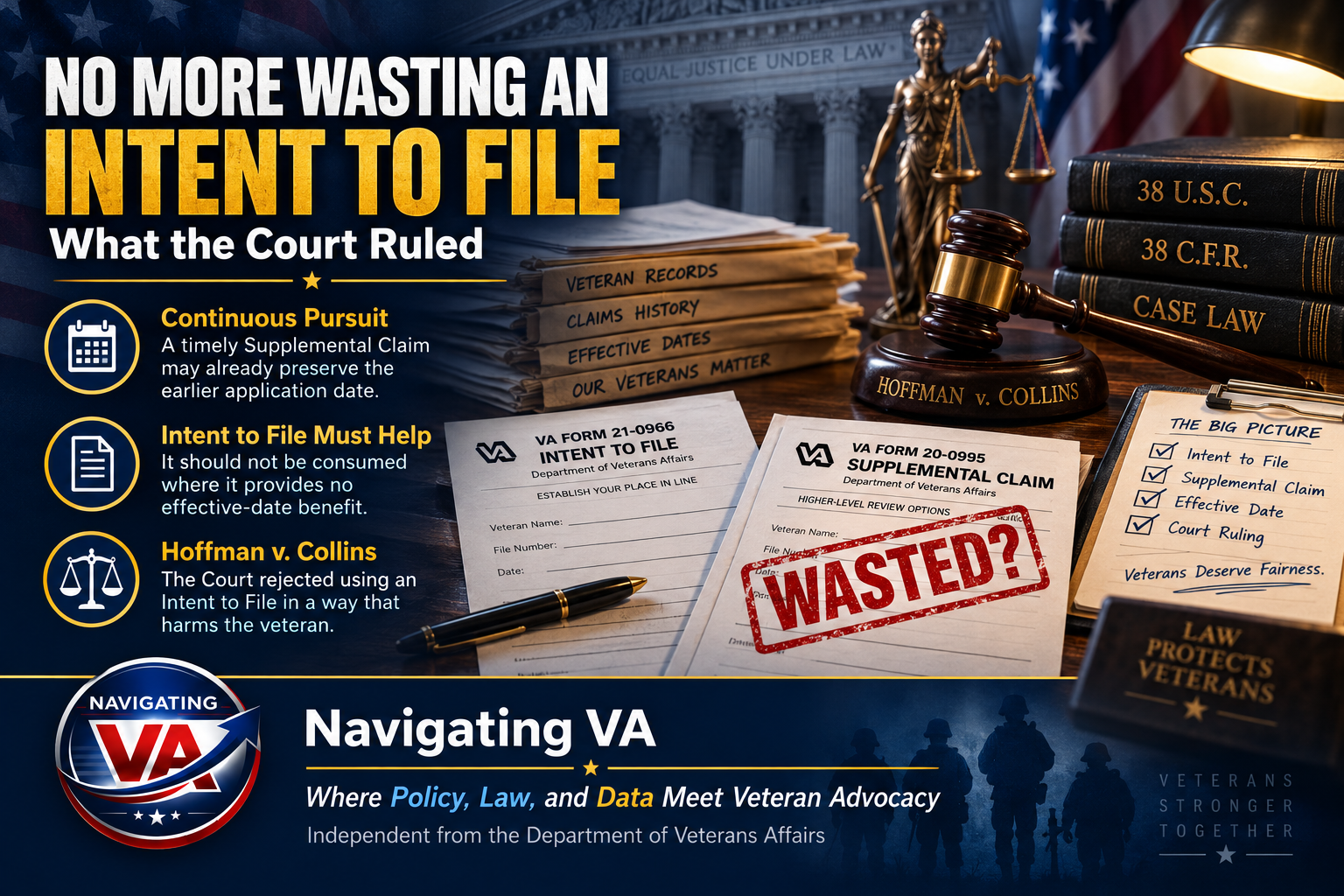
No More Wasting an Intent to File on a Supplemental Claim: What the Court Ruled
Read article: No More Wasting an Intent to File on a Supplemental Claim: What the Court RuledAn Intent to File can protect months of potential VA disability compensation while a veteran gathers the evidence needed to complete a claim. But what happens when a veteran already has another claim in progress…
-
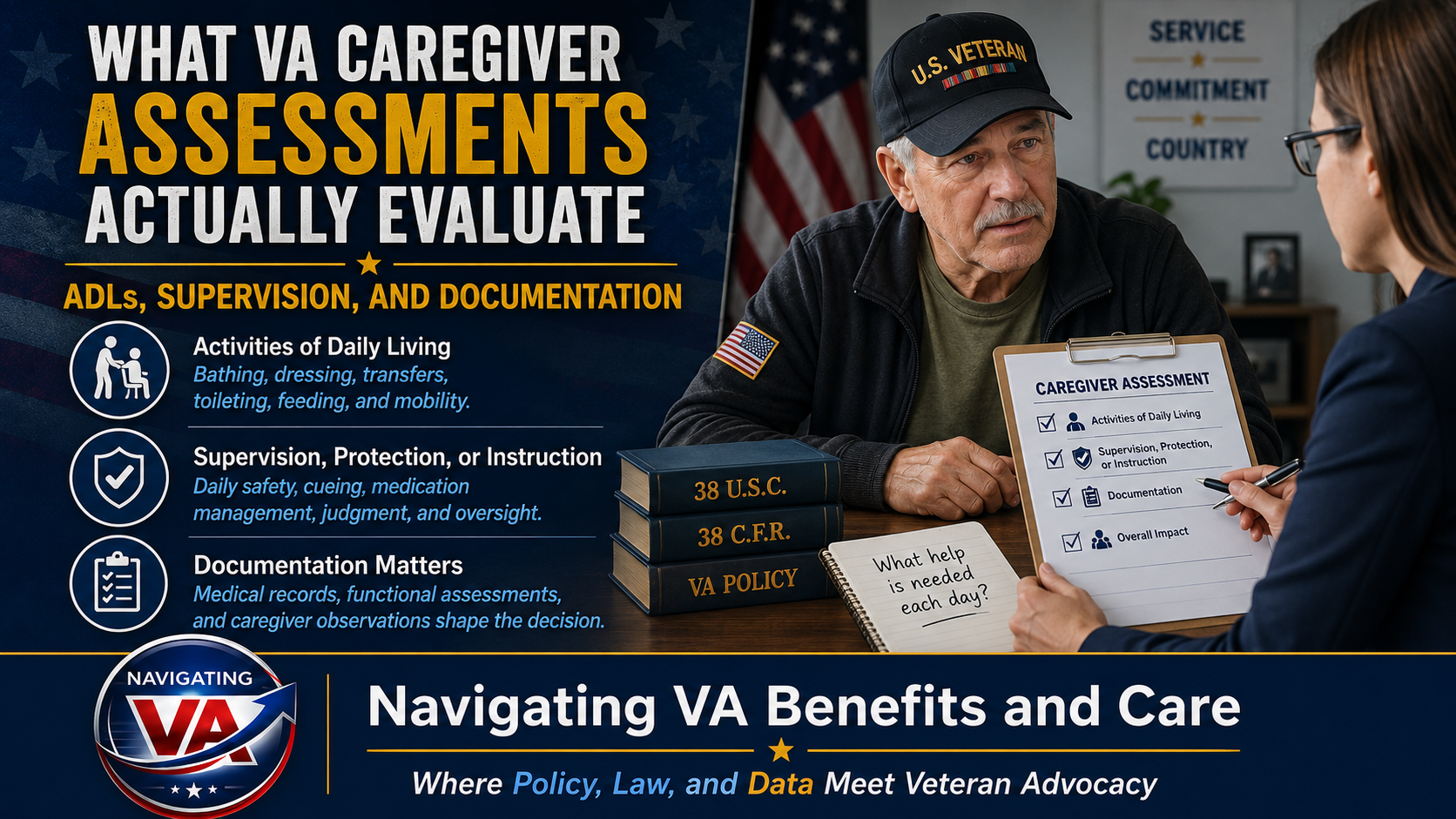
What VA Caregiver Assessments Actually Evaluate: ADLs, Supervision, and Documentation
Read article: What VA Caregiver Assessments Actually Evaluate: ADLs, Supervision, and DocumentationA serious diagnosis and substantial caregiver involvement do not, by themselves, explain how VA will decide a PCAFC application. The assessment process focuses on specific functional limitations, the frequency and type of assistance required, daily…
-

When Does a Veteran’s Statement Become Evidence?
Read article: When Does a Veteran’s Statement Become Evidence?One of the most common reasons for denying a VA disability claim is the statement: The evidence does not show a current diagnosed disability. For many disabilities, that conclusion may be correct. However, experienced service…
-
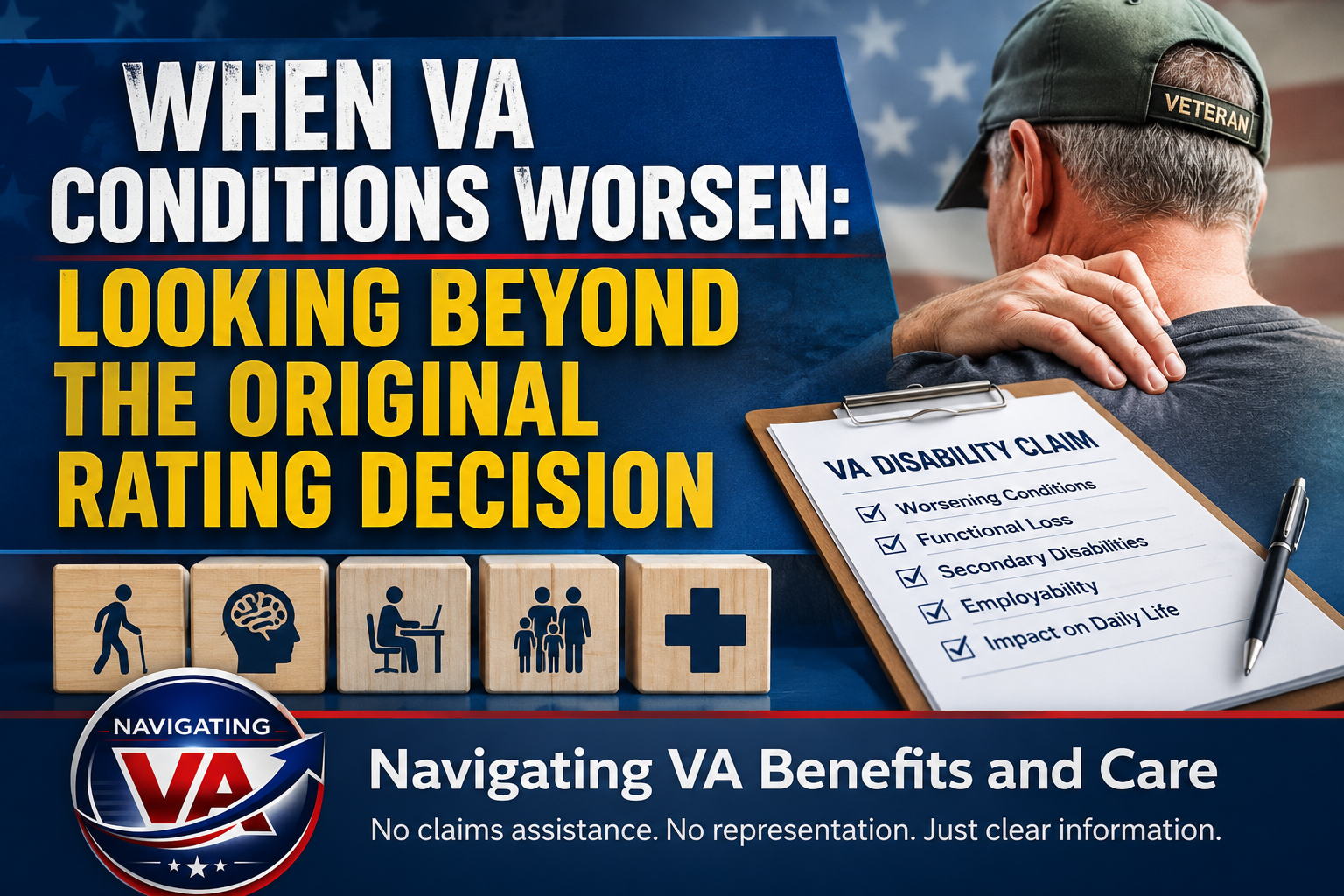
When VA Conditions Worsen: Looking Beyond the Original Rating Decision
Read article: When VA Conditions Worsen: Looking Beyond the Original Rating DecisionMany veterans think about worsening service-connected disabilities primarily in terms of whether they qualify for a higher rating. While increased evaluations are certainly important, worsening conditions often affect far more than a single percentage under…
-

The VA Is Moving Faster. The Law Still Requires Clarity. What That Means for Your Claim.
Read article: The VA Is Moving Faster. The Law Still Requires Clarity. What That Means for Your Claim.When the VA denies a claim, you should know it. That sounds obvious. But under recent changes in how claims are decided, it is becoming more difficult to tell exactly what was decided—and what was…
-
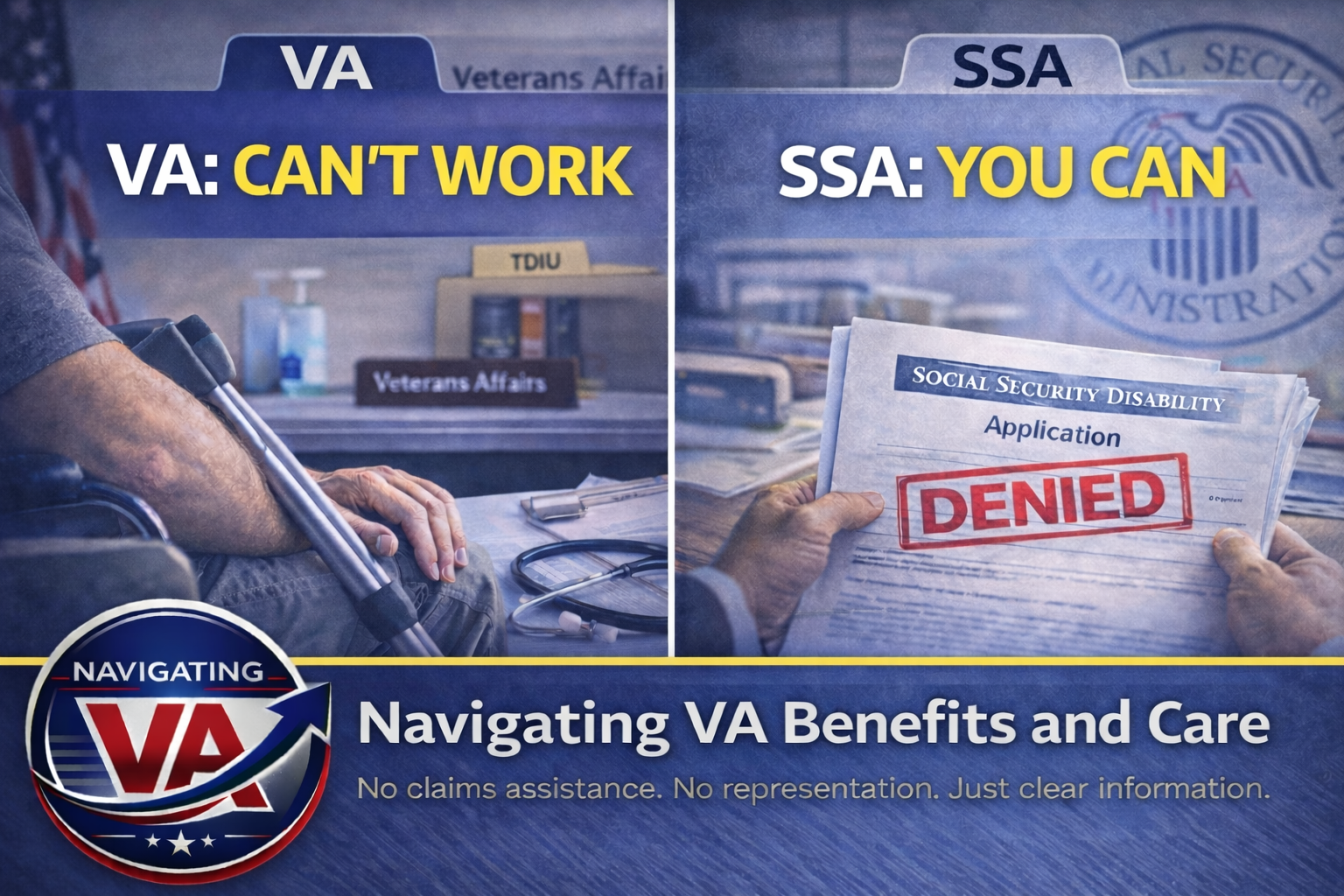
Veterans Caught Between Two Agencies: VA Unemployability and Social Security Disability
Read article: Veterans Caught Between Two Agencies: VA Unemployability and Social Security DisabilityVA says a veteran cannot work. Social Security may still deny the claim.This article examines how VA disability findings are evaluated in Social Security disability decisions, and what the data shows when those conclusions do…
-
Bad VA Exams Still Drive Denials — And Most Veterans Never See the Problem
Read article: Bad VA Exams Still Drive Denials — And Most Veterans Never See the ProblemIt’s natural to conclude that a claim was denied because the evidence wasn’t strong enough. If the VA said no, then something must have been missing. And often enough, strengthening the case with more evidence…
-

Your VA Medical Record May Be Working Against You
Read article: Your VA Medical Record May Be Working Against YouWhat gets written in your record is not always what you said. But it is what the system uses. Once something is written into your VA medical record, it becomes part of the story used…
-

No Record? That’s Not Enough to Deny a Claim: What the VA Must Consider Before Denying
Read article: No Record? That’s Not Enough to Deny a Claim: What the VA Must Consider Before DenyingMany veterans believe that if there is no record from service, there is no case. That belief keeps a lot of valid claims from ever being filed. And that belief is wrong. VA claims are…